Wednesday, June 10, 2020
Unit Plan Presentation Observations
I enjoyed listening to everyone that presented tonight about their unit plan. I also enjoyed seeing such great book lists and took some notes for ideas with these as well to be used in the future. As far as unit plan and concerns for my future as a teacher; those far my main concern is just putting all of the information that I have learned through my college career into a daily classroom. I feel like I have learned so so much but I feel like the first few months getting in to a routine for my first year will be very overwhelming. I have horrible anxiety and like to be very organized and not knowing where I will teach, how they run things, what their expectations, etc will be it is nerve wrecking. I like to have a set plan, and really dislike the unknowns. I am excited though to learn and start teaching and I am sure that I will catch on quickly and do great, especially with being a para for the last year, substituting for 2 years before that, and then student teaching this fall. I look forward to learning more throughout student teaching and as I become a teacher as well.

Wednesday, May 27, 2020
Week 6 Unit Book List (10 Books)
The following books are a book list that could be used for
Kindergarten Butterfly Life Cycle Unit.
1. The Very Hungry Caterpillar by Eric
Carle is a phenomenal and funny book for students to learn about the butterfly
life cycle. It is 40 pages and was originally published in 1969. Eric Carle
himself illustrated the book as well. Dolly Parton was a contributor. This book
is great for teaching the days of the week as well as each day the caterpillar
eats different things. The book was voted number 2 children’s picture book in
2012.
2. From Caterpillar to Butterfly by
Deborah Heiligman has a lot of great facts about each stage of the butterfly
lie cycle. The book was published in 1996 and is 32 pages long. It was
illustrated by Bari Weissman. The book as been named as a NSTA/CBC Outstanding Science Trade Books for
Children. This is a Let’s Read and Find Out book and explains simple science
concepts for preschoolers and kindergarteners. Let's-Read-And-Find-Out is the
winner of the American Association for the Advancement of Science/Subaru
Science Books & Films Prize for Outstanding Science Series.
3. How Does a Butterfly Grow? by D.K.
Publishing is a fun book with flaps to see the different parts of the life
cycle. It is about the
stages of a swallowtail butterfly. The book was published in 2019 and is 18
pages long. Close-up photos show the mommy swallowtail laying her eggs, the
tiny caterpillar hatching and growing, and the pretty butterfly emerging from
its chrysalis.
4. Monarch Butterfly by Gail
Gibbons is another great book for the life cycle of a butterfly. A lot of
classrooms do the life cycle of the monarch and actually get caterpillars and
let them grow and metamorphosis into butterflies as part of the unit. This one
would be great to go along with it. This book is 32 pages long and was
published in 2012. With clear,
labeled diagrams and simple text that defines and reinforces important
vocabulary, Monarch Butterfly introduces key concepts of insect anatomy and
behavior.

5. Caterpillar to Butterfly by Laura
Marsh which was published in 2012 would be another great choice. This book is a
National Geographic Kids book and is 32 pages long. This book has a content
section at the front that could help even independent readers know where
certain information is. It has each stage broken down and then also has a cool
facts content area. There is also a mother or butterfly content area as there
is a difference.
6. The
Amazing Life Cycle of Butterflies by Kay Barnham is
a great scholastics book that has DRA and Lexile Measurements. It is
illustrated by Maddie Frost and is 32 pages long. The texts is lively and
engaging and makes this book a favorite for students to return to again and
again. There are also Notes to Parents and
Teachers at the end to encourage further exploration and learning.
7. Science
Vocabulary Readers Butterfly Life Cycle by Jeff Bauer is a great book
especially for vocabulary. It was published in 2007 and is 24 pages long. With
this being published by scholastics it is another great book that has DRA and
Lexile measurements. This book includes exciting photos, illustrations,
glossary, even comprehension questions, diagrams, maps, and more! It is great
nonfiction book to help reading skills and vocabulary.
8. Lifecycles:
From Caterpillar to Butterfly by Camilla de la Bedoyere was published
in 2019 and is 24 pages long. It is a great book for discovering the stages of
the butterfly lifecycle. Students will learn how they are born, grow up, and
reproduce. It has amazing photographs of each stage, diagraphs that are labeled
to explain the growth and development, as well as facts, and even discussion
points for further learning. This book includes vocabulary on what an insect is
and even the body parts of an insect!
9. Caterpillar
to Butterfly by Lisa Herrington is a read about science book that
is 32 pages long. It was published in 2014. In this book students learn the
stages of the monarch butterfly and even how it fits in to the ecosystem. It is
very easy to understand for younger learners. It even has a diagraph of the
life cycle.
10. The last
book that I chose that I believe will be good for the Butterfly Life Cycle in
Kindergarten is the book Butterfly Garden by Margaret McNamara. It is
illustrated by Mike Gordon and is 32 pages and was published in 2012. This book
has a nice surprise at the beginning for the students in the book and would be
a nice surprise for students to see if they know what it could be as well.
There is a package that arrives on the teacher’s desk and it ends up being a
jar with 5 caterpillars. The students in the book watch as the caterpillars eat
and grow and turn to chrysalis and then to beautiful butterflies. This book is
also a scholastic book with DRA and Lexile measurements.
Week 5 Lesson Reflection
I feel like my lesson plan went well. The information that Terri Steffes sent looks like all aspects were met for my for lesson of my 5 lesson unit. My unit is over the Butterfly Life Cycle. I thought it was interesting seeing Tiffany have a lesson plan over the same topic and seeing how the lessons were similar but also very different. I will be interested to see her book list for the blog post for Week 6 that goes along with our unit plans. I believe overall everyone did a great job with their presentations and had the majority of the information needed for lesson plans. Great job everyone!! I am looking forward to seeing everyone's next presentation over lesson and then the unit presentations. I feel like we could save a lot of information from each other for our futures as teachers.
Thursday, May 14, 2020
Fun ways to teach vocabulary
There are so many fun and engaging ways to teach vocabulary. We need to make sure that we start with visuals such as word walls, but go even further and to VISUALLY show a picture and the definition of the word when possible!  (resource: http://life-between-summers.com/2019/12/01/5-engaging-strategies-for-teaching-vocabulary-words/?utm_medium=social&utm_source=pinterest&utm_campaign=tailwind_tribes&utm_content=tribes&utm_term=914356402_40076626_265865)
Another that is very fun an engaging is scrabble! I always loved playing scrabble as a kiddo and what better way to learn vocabulary but still have fun at the same time?! Scrabble is a game that could be played in the classroom in small group rotations and could be played at home as well for students to continue to learn at home.
Using the charts like above with the word, picture, and definition the students can play a game of finding the matches. Mix all of the words, pictures, and definitions up and then the students need to fine the matches back.
Bingo is a really fun way to teach vocabulary. Having bingo cards with the vocabulary words on them and as the teacher we tell the definition and then students find the vocabulary word that we are defining.
Popcorn is a great game that could be fun. (resource: https://www.notsowimpyteacher.com/2016/11/10-games-to-play-with-any-vocabulary.html) Students take turn drawing one card out and then say the definition. If the definition is correct the student gets to keep the card, if they are incorrect then the word goes back in the bag. The students can play for a certain amount of time or they can go until the cards are all out of the bag. Throw in some real popcorn for the students to eat once in a while and the students would be over the top excited.
Dice games are always fun. Kiddos love to roll dice. The next way to teach vocabulary would be to play a dice game. Depending on what the student rolls would determine what they need to do for each word. Have a list of word and have them roll the dice then they must pick a word to fill in the blank depending on the number they rolled. 1. give definition of a word, 2. give a synonym or antonym of a word, 3. write a sentence using a word, 4. draw a picture of a word, 5. make a connection, and 6. students choice.
(resource: http://life-between-summers.com/2019/12/01/5-engaging-strategies-for-teaching-vocabulary-words/?utm_medium=social&utm_source=pinterest&utm_campaign=tailwind_tribes&utm_content=tribes&utm_term=914356402_40076626_265865)Another that is very fun an engaging is scrabble! I always loved playing scrabble as a kiddo and what better way to learn vocabulary but still have fun at the same time?! Scrabble is a game that could be played in the classroom in small group rotations and could be played at home as well for students to continue to learn at home.
Using the charts like above with the word, picture, and definition the students can play a game of finding the matches. Mix all of the words, pictures, and definitions up and then the students need to fine the matches back.
Bingo is a really fun way to teach vocabulary. Having bingo cards with the vocabulary words on them and as the teacher we tell the definition and then students find the vocabulary word that we are defining.
Popcorn is a great game that could be fun.
(resource: https://www.notsowimpyteacher.com/2016/11/10-games-to-play-with-any-vocabulary.html) Students take turn drawing one card out and then say the definition. If the definition is correct the student gets to keep the card, if they are incorrect then the word goes back in the bag. The students can play for a certain amount of time or they can go until the cards are all out of the bag. Throw in some real popcorn for the students to eat once in a while and the students would be over the top excited.Dice games are always fun. Kiddos love to roll dice. The next way to teach vocabulary would be to play a dice game. Depending on what the student rolls would determine what they need to do for each word.
Have a list of word and have them roll the dice then they must pick a word to fill in the blank depending on the number they rolled. 1. give definition of a word, 2. give a synonym or antonym of a word, 3. write a sentence using a word, 4. draw a picture of a word, 5. make a connection, and 6. students choice.Thursday, May 7, 2020
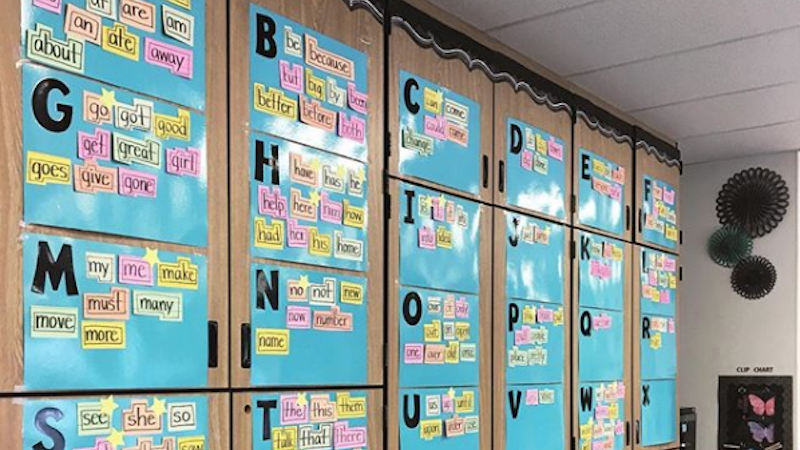
Word Wall in my classroom

 (resource: https://www.weareteachers.com/what-is-a-word-wall/)
Looking at all of the ideas of word walls I really have found a different type that I want to try. Maybe a mixture of both. I want the words to be able to be seen easily for the students to look up and use them especially during writing time but I also want the words to be able to be taken to their desks if they have difficulties seeing them or if they are more comfortable taking them to their desk. Differentiation is important even with word walls. I like this one here below how the students can take the words with them to their desk to be able to see them better when writing.
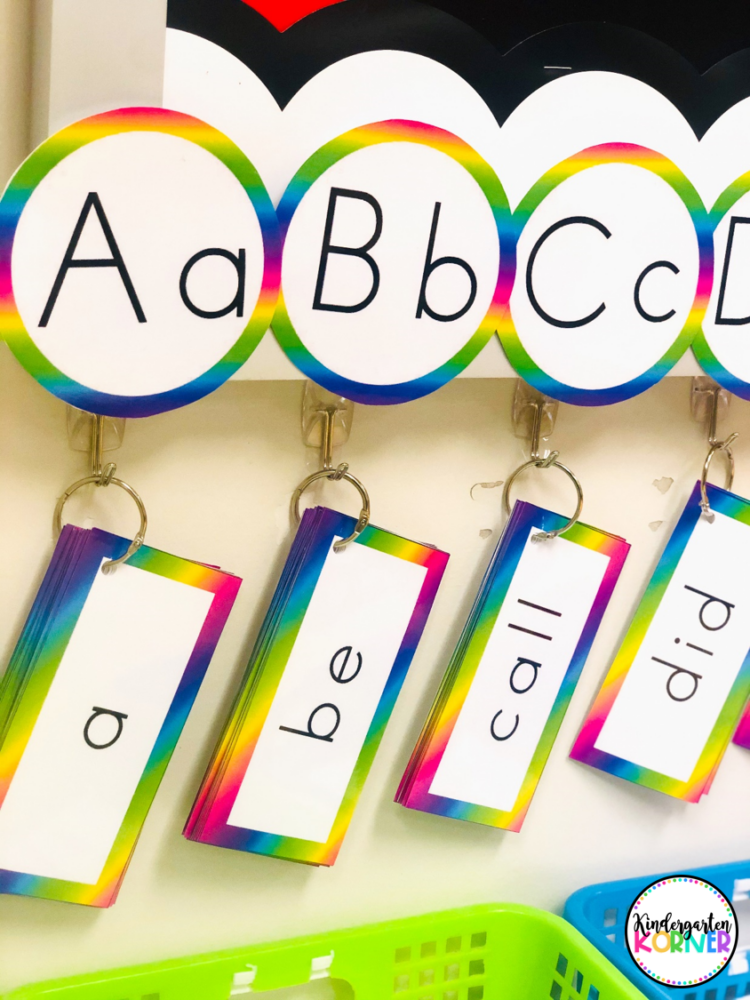 (resource: https://www.weareteachers.com/what-is-a-word-wall/) After doing more research I have found what I was truly looking for!! I want a word wall where the words can be easily removed and put back up so that they can be looked at from a distance or they can be taken to the students' desk if needed/wanted. I first thought that a magnetic board would be good but a purchasing a big magnetic white board may be pricey as a lot of classroom only have the whiteboard at the front of the classroom for writing on, they don't have an extra one. That being said I found this one that I love and would be affordable!!
  Velcro!! I would laminate all of the words and have Velcro on the back and then have Velcro on ribbons under each letter. Velcro is cheap and laminating them would make them reusable year after year. I love this idea!
Wednesday, April 29, 2020
Introduction 2 Truths & 1 Lie
Written by Miranda
A little bit about Miranda. I am married with three children and have a Labrador dog.
I love everything outdoors from swimming, fishing, hunting, and camping. I also am an Etsy shop owner who loves to do crafts and an avid couponer with a big stockpile of household items.
My husband and I follow Dave Ramsey and are debt free (minus our house). We also own three rental properties.
I currently am a paraprofessional in a local pre-k SPED classroom and I absolutely love it and this has fueled my passion for teaching even more!!
A little bit about Miranda. I am married with three children and have a Labrador dog.
I love everything outdoors from swimming, fishing, hunting, and camping. I also am an Etsy shop owner who loves to do crafts and an avid couponer with a big stockpile of household items.
My husband and I follow Dave Ramsey and are debt free (minus our house). We also own three rental properties.
I currently am a paraprofessional in a local pre-k SPED classroom and I absolutely love it and this has fueled my passion for teaching even more!!
Thursday, November 15, 2018
What a great group of lesson plans this evening! I absolutely loved Rebekah's idea of incorporating making smores with solar ovens in to her class for energy of the sun! What a fun way to learn about the sun's energy. Way to go Rebekah!
Karen's idea of using music to get the kiddos excited is a great one as well! It seems so easy to remember things when you are singing it and incorporating music! Awesome job Karen!
Marley I just watched the Deepwater Horizon movie today and then did a ton of research on it about the effect it had on the water. I love the water system and learning about it!! Great idea for 5th grade science!! Loved your lesson plan!
April I have never been one to love to read but after listen to your lesson plan I am sure the kiddos would really enjoy! I love the idea of taking breaks in between. I am sure this will be great for the students!
Kudos to all! Great job everyone!!
Happy Thanksgiving to all! Safe Travels!
Karen's idea of using music to get the kiddos excited is a great one as well! It seems so easy to remember things when you are singing it and incorporating music! Awesome job Karen!
Marley I just watched the Deepwater Horizon movie today and then did a ton of research on it about the effect it had on the water. I love the water system and learning about it!! Great idea for 5th grade science!! Loved your lesson plan!
April I have never been one to love to read but after listen to your lesson plan I am sure the kiddos would really enjoy! I love the idea of taking breaks in between. I am sure this will be great for the students!
Kudos to all! Great job everyone!!
Happy Thanksgiving to all! Safe Travels!
Subscribe to:
Posts (Atom)